
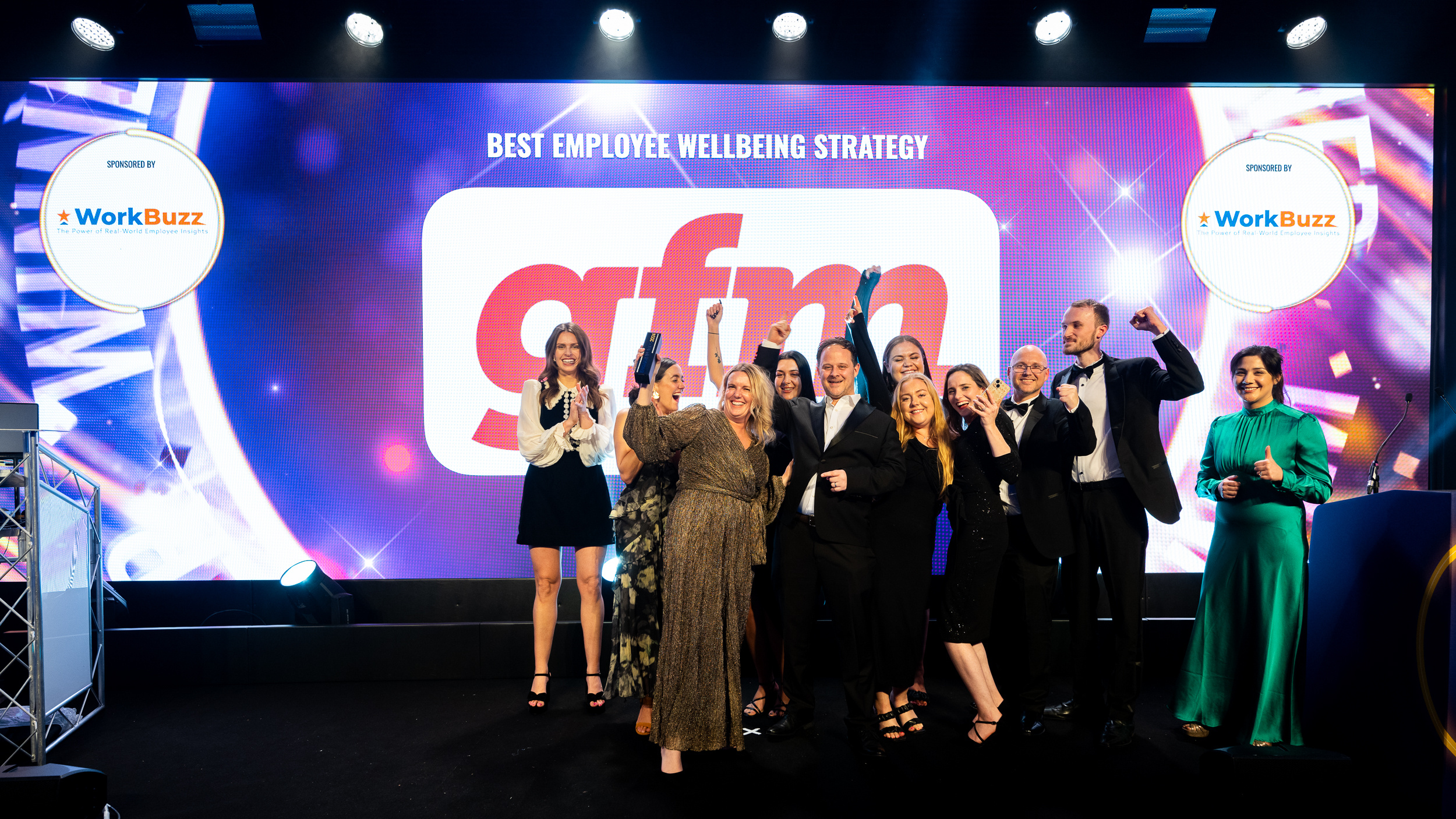
Following the 2024 Engage Awards, we’ve had the privilege of sitting down with our winners to...
The Talent Agenda and the Trust Imperative: Why the Workplace Matters More Than Ever
5 minute read

The Talent Agenda and the Trust Imperative: Why the Workplace Matters More Than Ever
9:07
Insights From Francesca Woodhouse, Managing Director, UK Workplace Advisory at Edelman
At the 2026 Engage Employee Summit, Francesca Woodhouse, Managing Director, UK Workplace Advisory at Edelman, shared powerful new insight from the Edelman Trust Barometer – and a clear message for leaders: in a world of anxiety and fragmentation, trust has become the operating system for talent.
For 26 years, Edelman has tracked trust across four major institutions: government, NGOs, media and business. Over time, the shared reality that once bound people together has eroded. Polarisation has grown, communities have fragmented and many feel more insular and aggrieved. Crucially, Francesca argued, we don’t leave those feelings at the door when we come to work. We carry them into our organisations every day.
Rising anxiety and a tougher environment for change
The data shows that employee anxiety is no longer abstract – it is concrete and growing. Across 33,000 respondents in 28 markets, employees report rising fears about:
- International trade and tariff conflicts damaging the companies they work for.
- Losing their jobs in an increasingly volatile economy.
- Being displaced by AI and automation, particularly in lower‑income groups.
In the UK, 71% of people in low income groups fear displacement because of AI. Whether or not those fears are objectively justified, they are real – and they shape how people respond to change initiatives, reskilling programmes and internal mobility.
Against that backdrop, business priorities such as transformation, upskilling and culture change become much harder to achieve. Security is often prioritised over risk‑taking, confidence falls, and employees are less willing to step forward into the unknown.
From “we” to “me”: mistrust of institutions, trust in people
One of the most striking findings from the Trust Barometer is the shift from a “we” mindset to a “me” mindset. Major societal events over the past decades have eroded trust in large institutions. Many people no longer trust government, media or even NGOs in the way they once did.
Yet there is a counter‑trend: trust is increasingly relational and approximate. While trust in distant institutions declines, trust in those closer to us rises. Through the lens of work, that means employees tend to trust:
- Their coworkers more.
- Their chief executive more.
Business is now the only institution of the four Edelman studies that is seen as both competent and ethical – particularly among higher‑income groups, but increasingly across the board. That gives organisations a unique trust advantage, and turns the workplace into one of the last arenas where trust can be deliberately built.
The cost of conflict and the mandate to bridge differences
Insularity and polarisation are not just societal problems; they show up inside organisations too. Edelman’s research reveals:
- 42% of employees would rather switch departments than work with someone who holds different views.
- 34% say they would prefer not to work with a team leader who has different political views.
That reluctance to work across difference reduces discretionary effort, undermines team effectiveness and ultimately affects commercial performance. If employees are less committed to collaboration, innovation suffers.
Francesca argued that this gives workplaces a clear mandate: to generate trust and bridge differences. Business leaders cannot simply be neutral observers; they are expected to actively broker trust and create environments where diverse teams can work together constructively.
CEOs under the spotlight: leadership that builds real trust
With business enjoying a trust advantage over other institutions, CEOs and leadership teams carry a disproportionate responsibility for sustaining it. Culture still comes from the top. The signals leaders send – the behaviours they reward, the way they manage change, the stories they share – matter enormously.
Edelman’s data shows that:
- People expect CEOs to lead by example and help bridge divides.
- There is a significant gap between expectations and perceived performance, suggesting many leaders have work to do.
- What employees say about their CEO has more impact on public perceptions than media coverage or corporate messaging.
In other words, the most powerful shaper of a CEO’s reputation is their own workforce. If employees see consistent, values‑driven leadership and feel respected and supported, that becomes a strong talent attraction magnet. If they don’t, no amount of external PR can compensate.
Francesca emphasised that employees want to hear from their leaders in a more human way – not about weekend hobbies, but about the values, obstacles and experiences that have shaped them. Authenticity and credibility, shown in context and complexity, are the building blocks of trust.
AI as a stress test for organisational trust
AI is one of the clearest case studies for how trust operates in modern organisations. Where employees feel leaders are not being honest about what AI means for roles, workloads and structures, they disengage – and may actively resist change.
Employees want two things from AI transformation:
- Confidence that AI will increase productivity rather than simply eliminate jobs.
- Skills and support to adapt to the changing nature of work.
In the UK, around six in ten employees want clarity on productivity gains and training to manage AI‑driven change. Interestingly, a significant proportion are willing to see their current tasks fully automated – but only if they trust their organisation to redeploy them into higher‑value, more strategic work. Trust in the business case and in leadership intent is critical.
Where clarity and security are lacking, younger generations in particular may mobilise peers to disrupt changes they don’t believe in. Trust, in this context, directly influences whether employees embrace or obstruct transformation.
The personalised workplace: growth, impact and the “learn‑it‑all” mindset
Beyond AI, Edelman’s research points to a sustained theme: employees increasingly expect a personalised experience at work. They want:
- Training, coaching and development opportunities.
- Clear career paths that help them grow as individuals, not just climb a hierarchy.
- The chance to make a social impact through their work.
- Space for their passions and creativity.
In the UK, 63% of people say they want to grow and develop as a person in their workplace. Around half see work as an outlet for their passions and creativity. This openness to learning aligns with the “learn‑it‑all” culture championed by leaders such as Satya Nadella – the idea that no one can know everything, but everyone can be constantly learning.
Francesca framed this as a powerful value exchange: “If you take care of me, I will take care of you.” When employees experience personalised growth and meaningful work, they are more likely to offer discretionary effort and deeper loyalty.
Trusted workplaces as engines of performance
Ultimately, the data shows that trusted workplaces are more effective workplaces. Where trust is high:
- Employees are more productive and willing to make discretionary effort.
- People feel safe enough to solve challenges independently, rather than waiting for direction.
- Teams are better equipped to work across difference and navigate complexity.
Although Edelman’s charts focused on AI, the principle applies across all aspects of organisational life. Trust reduces fear and increases agency. When people trust their leaders, their colleagues and the organisation’s intent, they are more willing to innovate, collaborate and own outcomes.
Trust as the operating system for talent
Francesca closed with a simple but powerful idea: trust is now the operating system for talent.
In a difficult jobs market and a turbulent world, organisations that set a clear tone, communicate with honesty, and combine commercial focus with genuine care for people will be the ones that flourish. Supported line managers, meaningful everyday employee experiences and leadership teams committed to doing the right thing for both the P&L and the workforce create a virtuous circle of trust and loyalty.
For HR, internal communications and business leaders, the implication is clear. You can no longer rely on glossy campaigns or employer brand slogans. Trust is earned through consistent actions: the way you manage change, the opportunities you create, the dialogues you host and the values you live.
As Francesca put it, those organisations that get trust right will be the ones that remain sustainable in the future – despite the macroeconomic, geopolitical and technological forces beyond any leader’s control.
To register your interest for the 2027 Engage Employee Summit click here.